
January 28, 2025
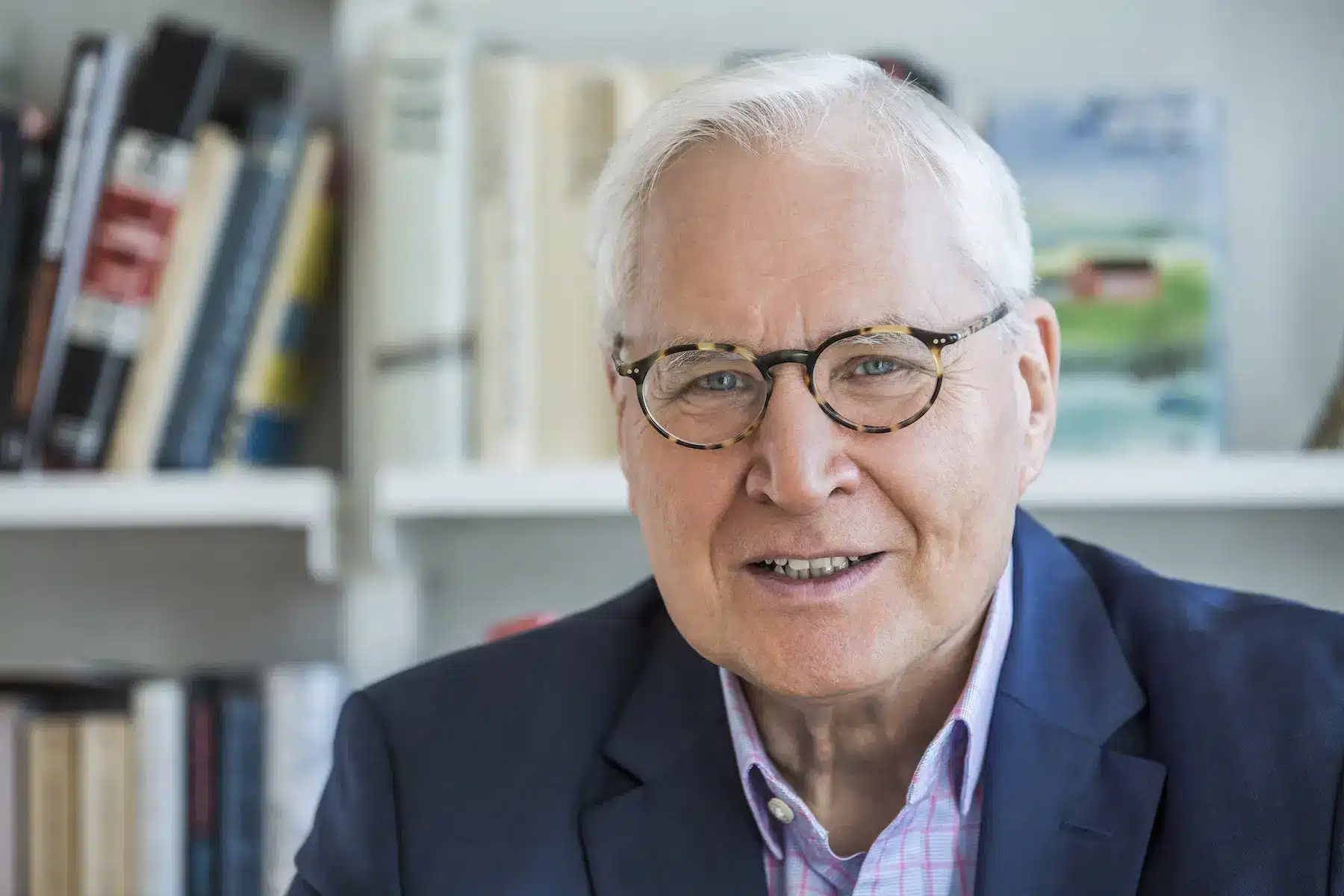
Prof. Dr. Jörg Ramseger
Prof. Dr. Jörg Ramseger: What children need and what school planners could build – Successful school buildings in the context of all-day schooling
With the legal right to all-day support in primary schools, Germany is facing a significant challenge: How can schools be designed to meet the needs of children and at the same time meet the increased demands of all-day education? Prof. Dr. Jörg Ramseger, professor emeritus at the Free University of Berlin and one of the most experienced experts in school development and educational research in Germany, provides answers to this question.
Successful examples and practice-oriented insights
Prof. Dr. Jörg Ramseger has decades of experience in school development. After training to become a primary and secondary school teacher, he completed a degree in education, psychology and sociology. He worked for several years as a teacher at the Wartburg primary school in Münster, the first all-day primary school in North Rhine-Westphalia, and played a key role in shaping its award-winning educational concept.
From 2004 to 2016, Prof. Dr. Ramseger was Professor of School Pedagogy with a focus on primary schools at the Free University of Berlin and Head of the Department of Educational Research for Primary Schools. His main areas of work include educational theory, science teaching and school architecture. As co-author of the Berlin educational program for the open all-day primary school and member of the State Advisory Board for School Construction, he brings extensive expertise to the planning of modern school buildings. He supports municipalities throughout Germany in all planning phases, from concept development to implementation testing, and regularly serves as an expert assessor on competition juries.
In 2014, he was awarded the Erwin Schwartz Primary School Prize for his entire scientific work.
On April 15 and 16, 2025, Prof. Dr. Ramseger will speak at SCHULBAU Leipzig about how schools can be designed to be multifunctional in order to take the needs of children, teachers and the neighborhood into account equally. A special focus is on the use of school buildings as neighborhood centers that offer flexible learning, leisure and meeting spaces.
A look into the future of educational construction
With his many years of experience and in-depth knowledge of the German educational landscape, Prof. Dr. Ramseger will present concrete examples of successful school buildings and show how sustainable architecture and well-thought-out spatial concepts contribute to a holistic educational experience. Leipzig, which plans to build around 30 new schools by 2030 through new construction and reactivation, is the perfect venue to discuss these forward-looking ideas.
Event notice: SCHULBAU Leipzig 2025
SCHULBAU Leipzig will take place on April 15 and 16, 2025 in the Alte Wollkämmerei. Under the motto “Multifunctionality and Multiple Use”, the focus is on the sustainable design of schools and open spaces. Take the opportunity to learn from Prof. Dr. Ramseger and other experts and be inspired by best practice examples.
Upcoming events
Simmilar articles
Skolen ved Dybbølsbro in Copenhagen: Architecture that brings together nutrition and learning
What goes on the plate shapes the head. In Copenhagen, this connection is no longer just discussed, it is actively shaped. Between historic cold stores and urban gastronomy, an educational project is setting out to bring the topic of nutrition from the margins to the...
Tobias Ortel from raumbildung: Workshops on co-creation and space as a third educator
Tobias OrtelParticipation is not a nice-to-have. If you want to build educational places that work, you have to be able to listen – and be willing to change perspectives. Tobias Ortel brings exactly these topics to his workshops at SCHULBAU Essen. The school...
Looking back: SCHOOL BUILDING Think Tank in Copenhagen 2025
SCHULBAU Think Tank Copenhagen - rethinking learningThe educational spaces of tomorrow are created where people across disciplines share ideas, develop visions, and assume responsibility. The SCHULBAU Think Tank in Copenhagen became a focal point for this movement on...